Do Eagles and Vick Already Have a Deal in Place?

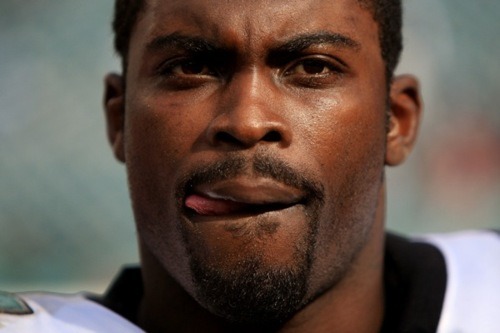
Michael Vick Philadelphia Eagles Contract Extension

I’m not sure I’ve ever seen a player and a team so united over the use of the franchise tag as Michael Vick and the Eagles seem to be. Often those relationships can be heated. Yet, somehow, for a player-team marriage that started two years ago with a tentative tryout, the Eagles and Vick have entwined their interests to the point where both parties appear to be on exactly the same page.

Here’s a player who could get tens of millions on the open market, but happily signed his tender almost immediately. He didn’t care about the looming lockout, lack of a long term deal, or the potential elimination of the entire franchise player designation. Nor did the Eagles seem at all worried that Vick might leave. Even the Colts are worried about losing Indianapolis institution Peyton Manning, but the Eagles are fully focused on trading Kevin Kolb (their only insurance policy).

Why are the two parties so seemingly content? I can think of only one good enough reason: Vick and the Eagles already have a handshake deal on a new contract extension.

If they already have a deal in place for whenever the new CBA comes together, that would free up the Eagles to pursue the rest of their business, like trading Kolb worry-free. And Vick could rest easy knowing that he’s set even beyond his large one-year contract.

Sure, both sides could be faking it. But look back to last offseason, before Vick revealed himself as the second coming. Vick was mouthing off in the media, talking about how he wanted to be the starter somewhere and mentioning other teams. And the Eagles somewhat actively shopping Vick as well. I wrote a round-up of those rumors at the time, and although the conclusion was off, the evidence was solid. That’s what it looks like when Vick and the Eagles aren’t on the same page: quotes to the media, anonymous reports about trades and contracts, etc.

This time around, it’s in both sides’ best interest to work out a long term deal. Vick likes it in Philly — and why wouldn’t he with Andy Reid around and DeSean Jackson and company as weapons. The Eagles can’t afford to let one of the best and highest-profile players in the NFL just walk out the door. If they hadn’t already come to an agreement, I think there would be some grumbling. Maybe nothing overt, but at least some media speculation and background sources to try to gain leverage in negotiations.

In this case, the absence of any of that conflict may be quite revealing.

Originally published at NBC Philadelphia. Photo from Getty.

Hot Read: Contracts, Corners, and Cornhuskers

Yesterday’s post questioned why the Eagles have gone after highly-ranked safeties, while sticking with mid-round projects at cornerback. Friend of the blog Sam Lynch laid out his view in the comments, that it’s the result of the Eagles failing to address defensive back in any substantial way through the draft since 2003:

“For example, in the five drafts between 2003 and 2007, the Eagles took 1 CB and 2 Ss in the first four rounds, and the second safety (Considine) was only taken after JR Reid had his accident”

I agree, although the next question is why. Why would a team that drafted Lito Sheppard and Sheldon Brown prior to the departures of Troy Vincent and Bobby Taylor fail to plan ahead this time? Even after they snagged Asante Samuel in free agency, they didn’t bother to even invest in one long term solution to play on the opposite side. Not sure I have a good answer for this one.

* * *

Perhaps the strangest story I’ve read in the last week was the yesterday’s revelation that David Akers had pre-draft dreams that foretold the Eagles picking another kicker.

That piece reminded me about the reports that surfaced at the end of the season that Akers had turned down a three-year contract extension with the team. I wonder if that offer really was as good as McLane reports: “a deal that would have made him one of the top five kickers in the league.” Seems like lunacy that Akers would turn that down, unless he already wanted to move on.

* * *

Non-Eagles note: the University of Nebraska was kicked out of the American Association of Universities last week. Many of you college football/Big Ten/Penn State fans may remember that Nebraska’s membership in the AAU was supposed to be a vital reason for their inclusion in the new 12-member Big Ten.

Of course, as I wrote a year ago, sticking to academic standards was never high on the Big Ten’s agenda.

Do the Eagles Value Safeties Over Corners Now?

Nate Allen, Joselio Hanson, Quintin Mikell Eagles Defensive Backs

Over the last couple of years we’ve seen an exodus in the Eagles defensive backfield. Brian Dawkins, Lito Sheppard, Sheldon Brown, and now (presumably) Quintin Mikell. There’s a completely new starting unit now — but the way the Eagles have gone about replacing all the departing All-Stars has been interesting. While there have been long-term holes at both cornerback and safety, the team has invested high draft picks only in safety.

Cornerback has long been considered a key position for the Eagles and other defenses. Today’s pass happy NFL regularly exposes mediocre corners (see Patterson, Dimitri). So one would think that in addition to signing Asante Samuel, the Eagles front office would be committed to finding more starters who can lock down opposing wide receivers for years to come. But they haven’t. Instead we’ve seen a string of low round picks, projects with upside rather than instant contributors: Jack Ikegwuonu (4th round), Trevard Lindley (4th), Curtis Marsh (3rd). They also drafted another fourth round corner, Macho Harris, only to convert him to safety and cut him after a year. Veterans Patterson, Ellis Hobbs, and Joselio Hanson haven’t been the answer.

Meanwhile, the team has now invested in two second round safeties who were considered NFL-ready by many scouts. Nate Allen started most of the 2010 at free safety, and Jaiquawn Jarrett, this year’s draft pick, should compete with Kurt Coleman for the starting strong safety spot right away. You can see the difference between a top second round pick like Allen and a fourth round player like Lindley, who barely saw the field last season and isn’t seriously being considered to start next year either.

So why the split? Why not draft a top cornerback to try to replicate the success of Allen and immediately upgrade the position, rather than roll the dice on another project? The opportunities, both this year and last year, were there. And no one can argue that cornerback is less of a need.

There’s no easy answer. Perhaps the Eagles thought that safety was where the value was, especially if they’re planning to pick up a cornerback in free agency, although that doesn’t necessarily answer the long-term question for a team that likes to draft for the future. Maybe the increase in importance of the safety position requires a renewed commitment. Or perhaps there’s more optimism about the team’s current corners than we thought.

Whatever the reason, the Eagles clearly put safety ahead of cornerback in the last two drafts. Free agency will tell us whether that preference is conditional and temporary, or if it’s part of a larger trend.

Originally published at NBC Philadelphia. Photo from Getty.
Site News: Striking Up an Iggles Conversation

A few months ago, when Iggles Blog closed shop and Derek, Gabe, Sam, and Tommy went their separate ways, it was a sad day for Eagles fans. Those of us who constantly visited the site felt lost. We missed the constant analysis of the bloggers — but perhaps even more, we missed the community that had grown among the site’s readers and writers.

Suddenly, there was no go-to place for Eagles conversation. Twitter’s fun for instant exchange, but not for sustained, multi-person conversation. Bleeding Green Nation has a strong community, but in some ways too large. Tommy and Sam eventually started Iggles Blitz, so their voices came back online. But we were still missing that meeting house.

Last week, that conversation returned, at least briefly, in the comments here. And it was a lot of fun to have those intelligent discussions and arguments once again. So how can we keep that going? I think we need a daily spot to go for daily Eagles conversation. And we can’t necessarily find that after one of the more detailed stats or opinion posts that I cross post here and at NBC Philadelphia, especially when I can get them out only two or three times a week.

Thus, in order to encourage more conversation, I’m going to try out some quicker posts with links, notes, comment round-ups, and smaller bites of Eagles thoughts. Rather than full-fledged analysis, these are meant to be conversation starters, since that’s what we seem to be really missing. I’ll take my cue from all you folks. If they work, we’ll keep them going indefinitely.

Also, for the creative types out there, the new type of posts need a name/tag. I have one or two ideas, but in the spirit of re-starting conversation: do you have suggestions?

Which NFL Referee Was the Strictest in 2010?

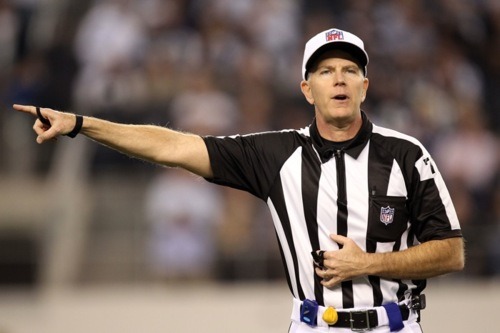
NFL Referee Terry McAulay

Back during the 2010 season, I started charting penalties by referee crew to see if there was any significant and consistent difference in how strict particular referees are, or whether they favor home or away teams.

The data I used was just the standard total penalties from each game, and thus it does have some problems. First, 17 weeks is obviously a small sample size. It’s better than one or two games, but we will still need to take a few years to see if the same referees keep popping up. Furthermore, the total penalties don’t account for those that were declined, nor do they break them down into categories by type: holding, roughing the passer, facemask, etc.

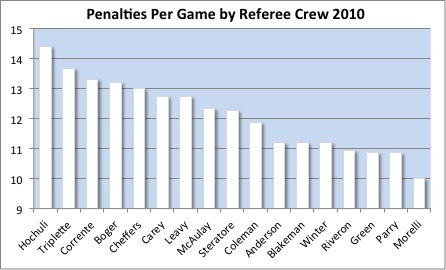
However, the results are still interesting to examine. Let’s start with average penalties per game in 2010:

Penalties Per Game by Referee Crew 2010

Just like it was most of the way through the season, Ed Hochuli’s crew gave out the most penalties, followed by Jeff Triplette and Tony Corrente’s teams. There’s a three to four penalty gap between those referees and the outlier on the other end, Pete Morelli.

Whether that difference is statistically significant is hard to say. Certainly there’s a good deal of variance game-by-game. However, Hochuli’s crew had only three games where they gave out just nine penalties. Refereeing the same teams, Morelli’s group had seven games in which they gave out nine penalties or fewer. It seems likely that somebody’s approaching the rules a little bit differently.

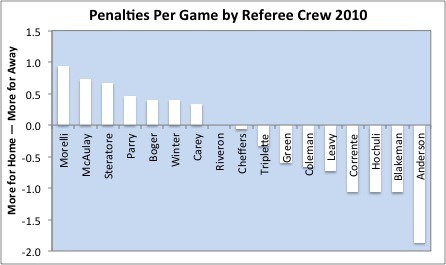
Penalties Per Game by Referee Crew 2010 by Home Away

The above graph breaks down the penalties as to whether they were against the home or away team. This data was more volatile when I added in the final few games, but overall the trend is similar to the previous version. Some referees, like Walt Anderson, penalized one side on average much more heavily than the other.

The Takeaway Message

The reality is that we can’t tell for certain, using these numbers, whether any one of these referees is particularly biased or is unfairly enforcing or ignoring the rules. But the graphs do at least pose the question. When we see a football game turn on a single call by a referee, it’s tough not to conclude that a few extra violations called or disregarded can have a big difference.

Originally published at NBC Philadelphia. Photo from Getty.
The 5 Eagles Most Likely to Lose Their Jobs

Jamaal Jackson Philadelphia Eagles 2011 Veterans

With the influx of yet another large class of incoming rookies from the NFL draft, current Eagles have to be worried. Each year more veterans lose their jobs as the team turns to younger and cheaper replacements. Here are the five veterans hurt most by the 2011 class of rookies:

David Akers — Might as well start with the obvious. Akers’s time with the Eagles is at an end. Truthfully, we all should have seen the writing on the wall. Akers’s kickoffs were only average, and his field goal kicking has actually declined relative to the rest of the league. His refusal to sign the transition tag was only the final straw, and the Eagles will have to hope that rookie Alex Henery can give them better results.

Quintin Mikell — About a month ago I made the case for re-signing Quintin Mikell. I still think it would be beneficial for the Eagles to do so, but the draft only made it more clear how remote that possibility is for the team. Even after the promising play of two rookies in 2010 (Nate Allen and Kurt Coleman), the front office added another young safety to the mix — second round pick Jaiquawn Jarrett. Presumably the plan is to let those players compete for the starting job in 2011 and beyond, with no more room for aging veterans.

Jamaal Jackson — What was the biggest lesson from the 2011 draft? That new offensive line coach Howard Mudd is ready to blow up the interior of the Eagles o-line and institute a whole new philosophy. Under his guidance the team drafted three interior linemen: guards Danny Watkins and Julian Vandervelde, and center Jason Kelce. All three are smaller than the massive converted tackles the Eagles consistently brought in under Juan Castillo. This new focus on agility rather than bulk makes Jackson (as well as Max Jean-Gilles) the odd man out. In returning from two season-ending injuries and soon-to-be 31 years old, Jackson was already facing an uphill battle. Having to fend off challenges from Kelce, McGlynn, and A.Q. Shipley while learning Mudd’s new technique may be too much for Jackson to overcome.

Leonard Weaver — Many experts already questioned whether Weaver would be able to return from the severe ACL tear he suffered in game one of the 2010 season. Now that the Eagles have drafted another fullback, USC’s Stanley Havili, to compete with last year’s replacement Owen Schmitt, it seems obvious that they don’t expect Weaver to come back. Factor in that Weaver is owed $2.6 million next year — five times as much as Schmitt — and you see the problem.

Stewart Bradley — An emerging star in 2008, Bradley was next in line for a big contract extension before he blew out his knee in the 2009 Eagles Flight Night practice. He hasn’t showed that same talent since, and missed the final three games of last season due to injury. I think the Eagles want Bradley back in 2011, but there’s a lot of younger competition now. Moise Fokou, Jamar Chaney, Keenan Clayton from the last two drafts. Casey Matthews, Brian Rolle, and Greg Lloyd this year. That’s an entire linebacker corps in three drafts. Even if the team resigns Bradley for 2011, are they willing to commit to him long term at the expense of the growth of other players? I’m starting to think not.

Care to disagree? Or just think I’m always right? All responses welcome in the comments.

Originally published at NBC Philadelphia. Photo from Getty.
On Steals, Reaches, and Senseless Draft Grades

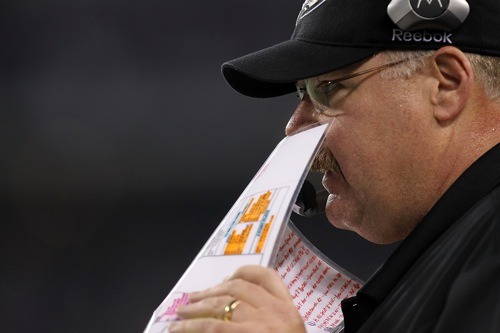
Andy Reid Philadelphia Eagles 2011 NFL Draft Grades

If you so desire, you can read instant draft grades written by numerous experts around the NFL world. Many scouts and reporters throw out their opinions immediately following the conclusion of the draft, telling fans what picks they love or hate and which teams made the most of their draft picks.

Unfortunately, most of this analysis is entirely worthless. Obviously, it’s impossible to judge any of these players before they take a single NFL snap. If we could, no one would have wasted tens of millions of dollars on guys like JaMarcus Russell and Ryan Leaf.

But draft grades also bother me because most of the grades are based on silly determinations that a player is a “steal” or a “reach.” It’s common to read analysis about how a team was lucky that X player dropped to them in the draft, such as Jeremy Maclin to the Eagles in 2009. Conversely, people will argue that teams picked a player too early. This year, Paul Domowitch of the Philadelphia Daily News chided the Eagles for prematurely drafting safety Jaiquawn Jarrett and kicker Alex Henery.

What are these assertions based on? These reporters and scouts certainly don’t have some omnipotent knowledge that eludes NFL organizations. Perhaps the teams even know more than these backseat-driving writers. For example, many observers laughed when the Oakland Raiders picked safety Michael Mitchell out of Ohio University, whom few had heard of before, in the second round of the 2009 draft. Then later that day it came out that the Chicago Bears had been targeting Mitchell only two picks later. While teams may be largely in the dark about their opponents’ intentions, they most likely have more information than the so-called “experts.”

Furthermore, every draft pick is a “reach.” Read up on auction theory, specifically so-called Dutch auctions, in which the auctioneer starts with an expensive price and slowly lowers it. The first person who is willing to pay for the item gets it. This is analogous to the draft, where the team that values a player the most will pick him the highest. Especially with a lot of bidders (32 teams in the draft), the “winner’s curse” can be substantial — essentially, everyone is overpaying.

I don’t mind if you want to talk about who you like, who you don’t, and who you wish the Eagles had drafted. But let’s move on from this draft grade talk about steals and reaches. It’s just misguided.

Originally published at NBC Philadelphia. Photo from Getty.
Old Man Danny Watkins is Eagles 1st Round Pick

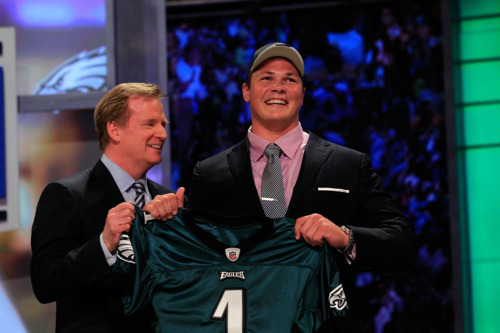
Danny Watkins Roger Goodell Eagles 1st Round Pick 2011

Danny Watkins, Eagles number one pick. Savior to the woeful right guard spot. But at 26 years old (27 in November), Watkins is one of the oldest players to be selected in the first round ever.

Outside of his age, this looks like a solid pick by the Eagles. As I’ve written on multiple occasions, they needed help along the offensive line more than anywhere outside of perhaps cornerback. And after only four years of playing football, Watkins already has shown the talent to be a first round selection. Certainly there is a lot of potential for offensive line gurus Andy Reid and Howard Mudd to tap into. Plus, everyone praises the former fireman’s work ethic and maturity.

But of course, there is the small matter of age. Even if Watkins becomes a Pro Bowler, his upside is limited. His second contract wouldn’t come until he was over the age of 30. That’s not a deal-breaker — 44 offensive linemen over the age of 30 started at least 10 games in 2010. But it is by far the biggest downside of the selection.

Below are the scouting reports on Watkins from various draft experts and the selection they projected him to be picked in their most recent mock drafts.

Rick Gosselin, Dallas Morning News (#28 overall, to New England):

Watkins is the safest pick in the entire draft - the one player you can confidently say will be in the Pro Bowl in 2012. He’s the best guard on the board, and some NFL teams were looking at him as both a center and tackle. (source)

Mel Kiper Jr., ESPN (#32 overall, to Green Bay):

He’s an interesting guy with his size and the versatility he provides. He’s going to continue to get better because they coach you up in the NFL. With the guard group not being particularly strong, that helps him a lot. It wouldn’t shock me if he went in the second or third round when all is said and done. (source)

Mike Mayock, NFL Network (#21 overall, to Kansas City):

I put the tape on and he jumped out at me. He’s heavy-handed [meaning Watkins ‘punches’ well], he finishes, and he’s nasty; he reminds me a lot of the [John] Moffitt kid from Wisconsin. I look at the two of them and I think they’re both interior starters. I think they’re centers or guards, and they’re starters in the league… has been coached really well… he can bend and he’s really naturally strong. He’s got what they call a 6-inch punch, and he can jar you with that 6 inches. ” (source)

Todd McShay, ESPN (#25 overall, to Seattle):

I think Danny Watkins fits in immediately as a starter and you look at his make-up: he’s a tough, physical, nasty offensive guard that’s going to upgrade this team in the run game and also help in terms of pass protection. (source)

Tommy Lawlor, Scout’s Notebook & Iggles Blitz:

Probably the most interesting prospect in the whole draft… Spent both years [at Baylor] as the  starting LT. Did a solid job there, but projects inside in the NFL.  Doesn’t have the athletic ability or footwork for playing OT. Looks like  a natural fit at G. Watkins is a tenacious blocker. He goes to the  whistle. Or the echo of the whistle. Anchors well. Able to re-set when  he is initially driven back. Sinks his hips and plays with good  leverage. Feet are fine for playing in a tight space (like G or C). Also  has a mentality that fits well at G. Sort of a bully. Likes to find a  defender and really mash on him. Uses his hands pretty well. Still raw,  but seems very coachable.

Older than teams prefer, but a real good player and the kind of guy that teams love. Should go in the early 2nd round. (source)

Wes Bunting, National Football Post (#19 overall, to New York Giants):

Watkins is… a strong anchor player, moves his feet well through contact, has the ability to play both guard spots and even some right tackle. I fully expect him to come in and start at a high level from day one. It’s not the sexiest of selections, but I love the pick and think he can be one of the better guards in the NFL early in his career. (source)

Originally published at NBC Philadelphia. Photo from Getty.